
What does it look like when a farm becomes more than just a place to grow food?
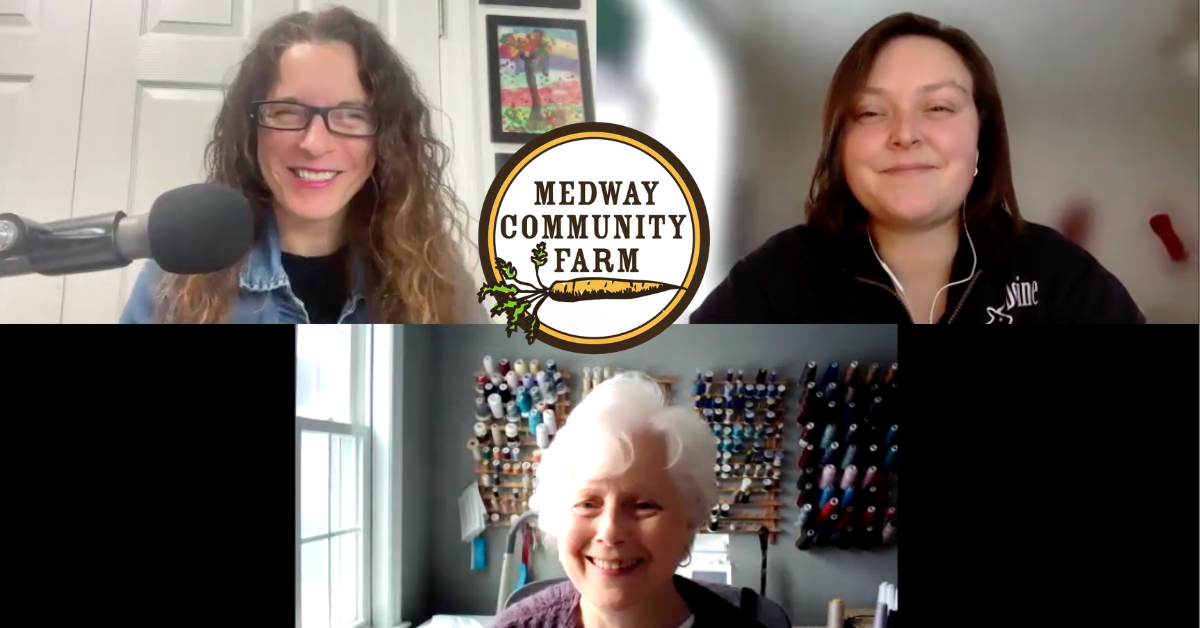
In episode 97 of The Agri-Tourist Podcast, I sit down with Carol Collord and Haley Goulet of Medway Community Farm to explore a model that blends farming, education, and community impact in a way that feels both intentional and necessary.
At its core, this farm isn’t just about production—it’s about purpose.
Carol conveyed that her “…passion for the farm… started with maintaining the open space… as an ongoing asset to the town.”
That idea—land as a shared community asset—sets the foundation for everything that happens here.
The Power of Open Space and Connection
For many, farms represent more than food—they represent access to nature, something that’s increasingly limited.
At Medway Community Farm, preserving open space isn’t just a value—it’s a responsibility.
“During COVID… the farm became the spot… people need to be outside, they want that open space.”
That moment reinforced something powerful: farms are essential not just for food, but for wellbeing, connection, and community resilience.
Education at the Core: From Classrooms to Fields
One of the most standout elements of Medway Community Farm is its deeply integrated education program.
This isn’t just a one-time field trip—it’s embedded into the school system.
“All the 4th graders currently come to the farm for 3 sessions… planting, maintaining, and harvesting.”
Students don’t just learn about farming—they experience it.
From planting seeds to harvesting crops, they follow the full lifecycle of food. And in doing so, they gain something far more valuable than knowledge—they gain understanding.
The Moment It Clicks
If you’ve ever watched someone pull a carrot from the ground for the first time, you know there’s a moment when everything shifts.
That moment—of realization, of connection—is what drives so much of this work.
Haley conveyed that “if they don’t know why they’re doing it, you’re missing a huge leg of the puzzle.”
Education isn’t an add-on here.
It’s a core pillar of the farm’s mission.
Rethinking the CSA Model
Medway Community Farm is also reimagining how Community Supported Agriculture (CSA) can work.
Rather than sticking strictly to traditional models, they’re offering flexibility—meeting customers where they are.
“The Free Choice CSA… people can come to the farm stand and essentially buy what they want with a prepaid card.”
This approach removes some of the friction that often comes with CSA participation, making it more accessible and appealing to a broader audience.
Beyond the Field: Farm Store and Local Collaboration
The farm’s impact doesn’t stop at the fields.
Through its farm stand and retail offerings, Medway is creating a hub for local food and products—from house-made items like hot sauce to locally sourced goods like pies and honey.
“The goal is always to mainly feature your own produce… that’s why the farm’s there.”
It’s not just about selling—it’s about building a local food ecosystem.
Food Access and Community Impact
Perhaps one of the most important aspects of Medway Community Farm is its commitment to food access.
Through programs like SNAP, HIP, and community shares, the farm is working to ensure that fresh, local food is available to everyone—not just those who can afford it at full price.
“People are getting $40 a month of free fresh vegetables and fruits.”
In addition, surplus produce is donated to local food pantries, reinforcing the farm’s role as a critical part of the community’s food system.
The Reality of Running a Community Farm
What becomes clear in this conversation is that running a community farm is complex.
It’s not just growing food—it’s managing programs, partnerships, education, retail, and outreach.
“It’s a huge coordinated team effort to get a meaningful volume of produce to people.”
And yet, that complexity is exactly what makes it impactful.
A Model for the Future of Farming
Medway Community Farm represents something bigger than itself.
It’s a model for what farming can become:
- A place for education
- A hub for community connection
- A solution for food access
- And a business that adapts to meet people where they are
As agriculture continues to evolve, farms like this are showing us what’s possible when purpose and production come together.
Click here to listen to the full Agri-Tourist podcast episode with Carol and Haley, followed by a dedicated episode about Medway’s education initiatives.